Saturday, August 6, 2011

An August projection for Rookies of the Year: National League Batters (part 3 in a 4 part series)

We've already considered the top candidates for the American League Rookie of the Year, 3 hitters, and 3 pitchers. Now it's time to focus on the Senior Circuit, more specifically, the hitters.

Here are the top 3 candidates for Rookie of the Year, according to me.

Freddie Freeman: 1B, Atlanta Braves: Fearless Freddie, as I like to call him, could potentially run away with the Rookie of the Year, should he continue to produce at the rate that he's been going. He's tops among all non June call-ups with a .300 batting average, is second only to Danny Espinosa in home runs at 15 and RBI at 54, leads all rookies with 120 hits, and is more of a slugger than anyone else. I've actually seen Freeman in person, and he is definitely a contender for the Rookie of the Year honor, though he's still not as good as Jason Heyward was last year.

Danny Espinosa: 2B, Washington Nationals: As is the case with Blue Jays catcher JP Arencibia, Danny Espinosa is an all or nothing guy. Either he hits a big home run, or he strikes out. As previously mentioned, Espinosa is first in home runs and RBI (17 and 55, respectively)and also in stolen bases with 12, but his batting average is a paltry .226, not exactly praiseworthy. Nonetheless, Espinosa is a hustler who does everything he can to win, and he's proven to be popular with the DC crowd, as evidenced by Danny Espinosa Bobblehead day in September. Espinosa needs to go on a tear, if he wishes to at least contend with Fearless Freddie, otherwise, he'll go down the tubes.


Justin Turner: 2B, New York Mets: The last time a New York Met won the Rookie of the Year award, it was 1984, almost 27 years ago. This year, the Mets have a contender in Justin Turner. Turner may not hit as well as Freeman (.268 batting average) or as hard as Espinosa (2 home runs) but the one thing he has that could at least propel him into 2nd place is a Rookie of the Month award (Freddie Freeman recently won the award for July, which is why Turner could settle for 2nd place among hitters). Nonetheless, Turner has also set a Mets record for consecutive games with an RBI, and he went from the starting second baseman in Buffalo to the starting 3rd baseman in New York when David Wright was hurt. Turner now plays 22d base, but he could garner a few votes for his ability to handle situations and his close competition with Espinosa and Freeman.

The last post will focus on National League pitchers.


Friday, August 5, 2011

An August projection for Rookies of the Year: American League Pitchers (part 2 in a 4 part series)

This is the second in a 4 part series in determining who could the American and National League Rookie of the Year. We started off with American League hitters, now it's time for American League Pitchers.

Here are the 3 top candidates from LOT:

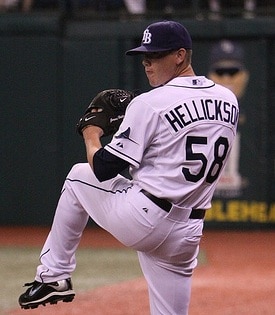
Jeremy Hellickson: Tampa Bay Rays:  You know you are a possible front runner when you win the AL Pitcher of the Month Award and the AL Rookie of the Month award at the same time. Hellickson certainly has pushed himself above the majority of the rookie pitchers by doing this. Though his won-loss record says otherwise, (10-7) his ERA is lower than any of the other rookie starters, including potential competitor Ivan Nova, who has 3 losses fewer. Hellickson also has more strikeouts than any other pitcher except for Mariners starder Michael Pineda, and is the only pitcher in this class to have thrown a shutout. Hellickson does have a couple strikes on him, like his rookie-leading 14 home runs, and his 45 walks, 3rd most among his class, but otherwise, if he can have another monster month like he did in May, he could be an easy choice for the award.

Aaron Crow: Kansas City Royals: Crow is only a reliever, not even a closer, yet, but eventually someone will have to replace the ineffective Joakim Soria, and Crow seems to be the perfect fit. Crow was a draft dodger in 2008 when the Washington Nationals drafted him 8th overall, but he did come back and get drafted by his home-state Royals. So far, the decision seems to have paid off. Crow was one of two rookies selected to this year's American League All Star team (Los Angeles Angels closer Jordan Walden was the other), and currently he leads all rookies, including starters in ERA with a miniscule 1.76 mark. Though his other stats are average at best, it wouldn't surprise me if Crow got a first place vote.


Jordan Walden: Los Angeles Angels: To be completely honest, I hate Walden. I don't know why, maybe it's because he's really good. Disregarding my hatred, Walden's best qualities are his low ERA at 2.91, his first all-star selection, and last but not least, his 24 saves, which lead all AL rookies and all but 4 AL closers. Walden is in a class by his own, and the writers who vote this fall should make note of that, If Walden is able to have a Neftali Feliz-like season, it could pay off for him, and he could run away with the award.


The next post will focus on NL hitters who could win the NL rookie of the Year award.

Tuesday, August 2, 2011

An August projection for Rookies of the Year: American League hitters (part 1 in a 4 part series)

Which rookies will earn this trophy?
Even though it is slightly past midseason, teams are getting ready for the final stretch. That means that it's time to figure out who could possibly win each major league award, at least for L.O.T. But being that this is a blog that is devoted to prospects and rookies, we will focus on the Rookie of the year award.

Each year, 2 awards are given out, one for the American League, and one for the National League.  These awards go to the most outstanding rookie, or the rookie with the best statistics. Last year, Giants catcher Buster Posey won the NL rookie of the Year award with a .305 batting average, 18 home runs, and 67 Runs batted in, all nice stats. In the AL, Rangers closer Neftali Feliz won, with a 2.73 ERA and 40 saves. Both Posey and Feliz beat out some impressive candidates to win, like Braves outfielder Jason Heyward and Tigers outfielder Austin Jackson.

There has been a recent trend though in the winners. Since 2004, the NL Rookie of the year has been a hitter, with current Reds pitcher Dontrelle Willis as the last pitcher to win. In the AL, the winner the past 2 years has been a relief pitcher. Evan Longoria was the last non-pitcher to win in 2008. However, there is the possibility that these trends will be broken this year, especially with the impressive rookies this year.

Here are the top 3 candidates that I would consider in the American League.

Hitters:

Eric Hosmer, 1B: Royals. In terms of hitting, Hosmer has been impressive. He has the highest batting average out of any non-June callup, at .286, and his 10 home runs are 3rd most out of any American League rookie, behind Blue Jays catcher JP Arencibia and Angels first baseman Mark Trumbo. Hosmer also has a terrific glove, and hits high in the Royals lineup. He's appeared in more games than every rookie except Trumbo and Arencibia, and has more plate appearances than everyone except Trumbo. Hosmer is an everyday guy, and a bright spot on an otherwise dismal Royals team. If anything, he could be a frontrunner in the Rookie of the Year Race.

Mark Trumbo, 1B: Angels. Trumbo reminds me of Ike Davis, an average hitter who has plenty of pop in his bat, as evidenced by his .256 average and AL Rookie leading 19 home runs, 88 hits and 19 doubles. What's also impressive about him is that he is the most active rookie. Trumbo has appeared in more games, and gone to the plate more times than anyone else. He's played the hero role also, with plenty of timely hits that have helped the Angels win key games, not to mention his rookie-leading 53 RBIs. Should Trumbo raise his average, expect him to overtake Hosmer as the top hitting rookie, and make a serious run for Rookie of the Year.

JP Arencibia, C: Blue Jays: There seems to be a rule when it comes to voting for the rookie of the year in baseball. Anybody with a low batting average, no matter how impressive their other statistics are, is not going to win. If that's the case, then JP Arencibia has some major work to do if he wants to contend. Though Arencibia is hitting .218, he has the second highest homer total at 16. the third highest double total at 12, the second highest RBI total at 45, and the third highest hit total at 62. Arencibia may be a catcher, but that's no excuse when he's hitting in a large park like Rogers Centre. If anything, Arencibia could potentially have a resurgence and contend for Rookie of the Year, but that's very unlikely.

The next post will feature American League pitchers who should be considered for the Rookie of the Year award.

Saturday, July 23, 2011

Trading prospects at the deadline: A history and some predictions for the 2011 deadline

Daniel Hudson was one of many good prospects to have found a new team at last year's deadline. Which prospect will find a new home at this year's deadline?
The Trade deadline is 9 days away, but that doesn't mean that there won't be any player moves in the coming days. As of now, there have been a few relatively minor deals, most of which involve major leaguers for PTBNL's or players to be named later. In these cases, a prospect will likely find himself in a new organization. However, there are also blockbuster deals in which a high profile major leaguer will be sent to another club, and in return, the team will get prospects. These deals are much more commonplace, and in a way, more exciting than straight major leaguer deals. Here are 3 examples of deals in which major leaguers were dealt for prospects, and the prospects made a significant impact:

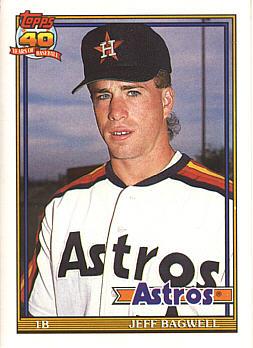
1990: Boston Red Sox trade Jeff Bagwell to Houston Astros for Larry Anderson: While most Red Sox fans look at this as a terrible move, virtually every Astros fan agrees that Bagwell is perhaps the greatest Astro of all time. After the deal, he hit almost 450 home runs, won Rookie of the Year in 1991 and MVP in 1994, and was a 4 time all star. In 2007, Bagwell was given the ultimate honor for any Astro, when his number was permanently retired. Arguably, Bagwell is the greatest Astro ever.


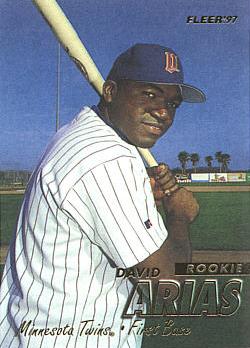
1996: Seattle Mariners trade David Ortiz to Minnesota Twins for Dave Hollins: Back in 1996, David Ortiz was a middling prospect known as David Arias. Had he not been traded to Minnesota for a guy named Dave Hollins, the only thing that would have changed about him would have been his name. After the deal, Ortiz became a solid DH for the twins for a few years, before he moved on to Boston in 2003, where he has become synonymous with clutch hitting.


2004: New York Mets trade Scott Kazmir to Tampa Bay Devil Rays for Victor Zambrano: I am a Mets fan, and 7 years later, even though Kazmir is essentially broken down, I still get knots in my stomach when I think of this deal. Kazmir was a highly touted prospect out of high school 2 years away from going to the big leagues. In a deal that essentially ruined Jim Duquette's general managing career, he sent the flamethrower to Tampa Bay, still known as the pathetic Devil Rays. In 2 years, Kazmir became part of the fine young core that brought the Rays to their first postseason, and their first World Series.


And so there you have it. 3 prospects who went on to have good careers.

When the deadline comes around, there will be a few prospects on the move, some high level players, some not as high. Here are a few players who could find themselves on the move.

Mark Rogers, P Milwaukee Brewers: There is no doubt in my mind that Mark Rogers will be on the move some time in the next few days, or even in a month or two. There is also no doubt in my mind where he could possibly be going too: the New York Mets. Should Carlos Beltran be traded to Milwaukee, there is a definite possibility of him catching the next flight to JFK, then another to Buffalo. Should Beltran not be traded to Milwaukee, he could be one of the 2 players to be named in the Francisco Rodriguez deal. Either way, Rogers is a possible hot commodity, whom the Mets should try and get. He's fast, and although he has a bit of a control issue as well as a small injury history, he could be a solid starter.

Lars Anderson, 1B Boston Red Sox: This is purely speculation, but my feeling is that if the Red Sox are still high on Kevin Youkilis, Lars could become expendable, he could possibly be included in a deal for pitching help. Lars is a slick defender and has a decent bat, so he could be another Bagwell-in-waiting. Regardless, if any team should deal with Boston, Lars is the perfect bargaining chip to have.


Zach Wheeler
Brandon Belt
Gary Brown
One of the Giants big 3 prospects: Consider this: Buster Posey is done for the year, Freddy Sanchez is also hurt, Tim Lincecum is borderline ineffective, and Brian Wilson is gimping. In short, the Giants chances of returning to the Fall classic are doomed if they don't do anything. Well, okay, they may have added a couple guys at no risk, like Bill Hall and Jeff Keppinger, but seriously, they will not win many games with those two as summer rentals. The Giants will have to get rid of at lest one of their big 3 prospects: pitcher Zach Wheeler, first baseman Brandon Belt, and outfielder Gary Brown. Wheeler doesn't have a lot of pitches, but his fastball and curveball are a deadly one-two punch, while his changeup is average at best. His mechanics do not need to be changed, and he's a possible middle rotation starter. Belt and Brown are contact guys, but Belt's other strength is his discipline, while Brown's is his speed. Regardless, both are solid guys, and one of the three could be a potential star, even if it comes at the cost of not being in a Giants jersey.

And there you have it. While my predictions may or may not come true, it is likely that during the deadline, there will be at least 1 high level prospect will be moved. That's all for today. Until next time.




Friday, June 17, 2011

Let's fix things up around here


How do you turn the MLB draft from a crap shoot, to a science?


There has been plenty of discussion about revamping Major league baseball. Among the topics of reform have been expanding the playoffs, moving a National League team to the American League, and fixing the draft.


Of all things that have been mentioned, the draft does need some help, if not a total overhaul. There are plenty of things wrong with the old system. Teams are not adhering to the slotting system put in place by current Mets general manager Sandy Alderson, which has led to astonishingly high signing bonuses. Amazingly enough, the draft was put in place back in 1965 to curtail these types of signing bonuses. Unfortunately, teams feel the need to grab talent at any price, and it has led to some issues. Back in 1964, the record signing bonus at the time belonged to Angels outfielder Rich Reichardt who signed for a then-unheard of $205,000. Today, that money would go to a 6th rounder. In 2009, pitcher Stephen Strasburg agreed to what is now the largest signing bonus in baseball history, a whopping $7.5 million, thanks in part to Scott Boras, who held negotiations until the final hour.

However, some teams cannot afford this money, and have drafted players based on signability. Take the San Diego Padres in 2004. With the first pick, they had the chance to grab Golden Spikes award winner Jered Weaver, brother of then-active Jeff Weaver, or Stephen Drew, brother of JD Drew. They ended up taking prep shortstop Matt Bush out of a San Diego high school not for his talent, but for his signability. Several injuries, a position change, and a few suspensions later, this happened:

That sends a clear enough message that signability isn't always the way to go.

Major League Baseball is also looking at ways to curtail the high asking prices of international talent as well, including the possibility of adding an international player draft, in addition to the regular draft. This problem developed a head when the Cincinnati Reds signed Cuban pitcher Aroldis Chapman for a large contract.

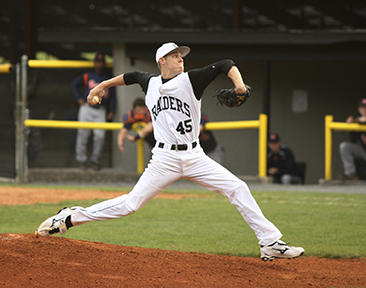
To put it quite simply, if there is anything Major league baseball needs to improve the most, it's the draft. With the signing bonus problem, most teams have elected to draft players based on their signability, this was seen during the 2011 draft when Science Hill High school pitcher Daniel Norris fell to the second round amid rumors that he was demanding an exorbitant contract. Norris was projected to fall to the top 15 picks.

How should Major league baseball fix the draft? There are plenty of things that could be fixed, including penalties for going over slot value in signing bonuses, such as forfeiture of draft picks. Major league baseball could also implement a salary cap in order to curb the unusually high asking prices of amateur talent controlled by people like Scott Boras. Granted, high school talent could face a dropoff for those who wish to receive good money. Less high schoolers could sign and end up attending college instead. Moving, on, the idea of an international draft is quite intriguing, however, there is the question of when it would take place. A possibility could be during the All Star Break. Yet another possibility is allowing trades, like in other sports drafts. Granted, the question would be how the trading system would work.

These are just a few suggestions, however, there is plenty of work to be done if Major league baseball wants to change.


Thursday, June 16, 2011

Where will Josh Bell go?

Josh Bell: a Pirate or a Longhorn? You decide.
While most people can say that the Pittsburgh Pirates had a great draft, it could get even better, or worse, depending on second round pick Josh Bell.

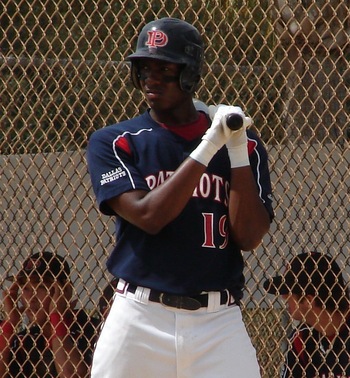
Bell, an outfielder for Dallas Jesuit High School, and the 61st overall selection in the 2011 draft, is torn between a potentially lucrative contract with an impressive signing bonus, or the chance to play for legendary coach Augie Garrido at the University of Texas, a perennial baseball powerhouse.

Shortly before the 2011 draft, Bell made it explicitly clear to all 30 teams that he did not want to be drafted, saying he would like to honor his commitment to Texas. Apparently, the Pirates didn't get the memo.

As if he wanted to make it even clearer, Bell hired Scott Boras, the baseball super-agent, to be his advisor. Any team knows that Boras demands top dollar for his players, and that goes without saying. His players are well compensated for their ability, in fact, Alex Rodriguez, one of his clients, is currently the highest payed baseball players.


Knowing the Pirates will stop at nothing to sign the top notch outfielder, expect them to attempt to offer him a very large contract. Reports have differed as to the contract, but reportedly, there have been rumors of a 3 million dollar signing bonus, almost half the record bonus that Stephen Strasburg agreed to in 2009.

The Pirates are quite familiar with signing difficult high schoolers. Last year, they agreed to a contract with pitcher Stetson Allie, a projected first round pick who fell to the compensatory round. Allie ended up being signed, and is now the 2nd best prospect in the Pirates system.

However, losing Bell to the University of Texas will not be a total loss, the Pirates will receive compensation in the form of a second round pick, should he not sign.

What does this all mean for Josh Bell? While he has said he will play for Texas, there is a slight chance he will sign. provided the Pirates show him enough green. If the Pirates could get Allie, then it's a possibility that Bell will be in Pittsburgh. However, when you have a guy saying that they don't want to be drafted, there is a 99% chance they will be going somewhere other than professional.

The problem with this is that the players who have been drafted in the early rounds in high school who attended college usually have seen their stock fall. Take Matt Purke, who went 15th overall to the Texas Rangers in 2009, but decided to attend college. 2 years and plenty of injuries later, he's a 3rd round pick by the Washington Nationals. The same goes for LeVon Washington, the other 2009 first rounder not to sign, instead opting to go for junior college. A year later, he was chosen in the 4th round by the Chicago Cubs. While I'm not saying that Bell will be making a big mistake in going to Texas, I am saying that history hasn't been kind to those who stayed in school. Bell may or may not be the same person he was, but should he increase his production, expect big things from him, and maybe he could be a first rounder in 3 years.

Wednesday, June 15, 2011

College World Series draftees

The College World Series starts June 18th in Omaha. For the first time since 1950, Johnny Rosenblatt Stadium will not hold the series, instead it will be in a new home: TD Ameritrade Park Omaha. * schools will fight for the championship, each school is well represented with draftees. Here's a look at each school and the players that were drafted from them:

We start off with #1 Virginia, who had 8 Cavaliers chosen in the MLB draft. Highlighting them is Danny Hultzen, the 2nd overall pick, chosen by the Seattle Mariners. Virginia's selections are as follows, according to their baseball website:


Danny Hultzen, P, Mariners (1st round, 2nd pick)
John Hicks, C, Mariners (4, 123)
Will Roberts, P, Indians (5,158)
Steven Proscia, IF, Mariners (7, 213)
Tyler Wilson, P, Orioles (10, 305)
Kenny Swab, C, Royals (21, 636)
Cody Winiarski, P White Sox (36, 1101)
John Barr, OF, Indians (39, 1178)

Next is #2 Florida, who has 11 draftees. None were taken in the first round, however, most notable was pitcher Nick Mardone, who was chosen in the 4th round by the Los angeles Angels. Here are the draftees, according to onlygators.com.

LHP Nick Mardone – Round 4, Pick 104 – Los Angeles Angels of Anaheim
RHP Anthony DeSclafani – Round 6, Pick 199 – Toronto Blue Jays
LHP Alex Panteliodis – Round 9, Pick 282 – New York Mets
RHP Tommy Toledo – Round 11, Pick 341 – Milwaukee Brewers
2B (SS) Josh Adams – Round 13, Pick 403 – Florida Marlins
OF (1B) Preston Tucker – Round 16, Pick 498 – Colorado Rockies
C Ben McMahan – Round 23, Pick 701 – Milwaukee Brewers
RHP Matt Campbell – Round 24, Pick 751 – Philadelphia Phillies
RHP Greg Larson – Round 29, Pick 885 – Los Angeles Angels of Anaheim
OF Bryson Smith – Round 34, Pick 1,045 – Cincinnati Reds
OF Tyler Thompson – Round 46, Pick 1,387 – Washington Nationals


Next is #3 North Carolina, who had 5 Tar Heels taken in the draft. Most notable is SS Levi Michael, who was taken in the first round by the Minnesota Twins. Here are the picks, according to the Tar Heels official website. No pick numbers were provided.


Levi Michael, SS Twins (1st Round)
Greg Holt, P Nationals (8)
Jesse Wierzbicki, 3B Astros (24)
Patrick Johnson, P Rockies (25)
Jacob Stallings, C Reds (42)


#4 South Carolina is next. The Gamecocks tied Florida with 11 selections in the draft. Most notable of these selections was Jackie Bradley Jr. the 2010 College world Series most valuable player, who was chosen in the compensatory round by the Boston Red Sox. Here are the picks, according to South Carolina's Website

Jackie Bradley Jr. - Boston - S-1st - 40 
Matt Price - Arizona - 6th - 184 
Scott Wingo - LA Dodgers - 11th - 344 
Peter Mooney - Toronto - 21st - 649 
John Taylor - Seattle - 22nd - 663 
Adam Matthews - Baltimore - 23rd - 695 
Bryan Harper - Washington - 30th - 907 
Michael Roth - Cleveland - 31st - 938 
Steven Neff - San Francisco - 41st - 1257 
Tyler Webb - Cincinnati - 48th - 1465 
Adrian Morales - Kansas City - 49th - 1476


Following South Carolina is #6 Vanderbilt, who had an astonishing 12 players drafted in the MLB draft, an SEC record. Most notable, is pitcher Sonny Gray, who was chosen in the 1st round by the oakland Athletics. Here are the Commodores draft selections, according to the Vanderbilt Website.


Sonny Gray, Oakland, 1, 18 Grayson Garvin, Tampa Bay, 1-S, 59 Jason Esposito, Baltimore, 2, 64 Jack Armstrong, Houston, 3, 99 Aaron Westlake, Detroit, 3, 106 Corey Williams, Minnesota, 3, 117 Taylor Hill, Washington, 6, 187 Mark Lamm, Atlanta, 6, 206 Curt Casali, Detroit, 10, 317 Navery Moore, Atlanta, 14, 446 Will Clinard, Minnesota, 30, 928 Joe Loftus, Arizona, 46, 1384 


Following Vanderbilt is #7 Texas, who had 8 players selected in the draft. Most notable is pitcher Taylor Jungmann, who was chosen by the Milwaukee Brewers in the 1st round. Here are the selections, according to MLB.com's draft tracker. Round numbers weren't provided.


Taylor Jungmann, P Brewers (13th pick overall)
Sam Stafford, P Yankees (88th)
Brandon Loy, SS Tigers (167th)
Cole Green, P Reds (295th)
Andrew Mckirahan, P Cubs (639th)
William Shepherd, 1B Mets (732nd)
Kevin Dicharry, P Phillies (1261st)
Kevin Lusson, C Rays (1380th)


Next is Texas A&M, who had 8 players selected in the MLB Draft. No Aggies were selected in the first round, but most notable was John Stilson, a pitcher selected in the 3rd round by the Toronto Blue Jays. Here are the picks, according to Texas A&M's website.


John Stilson - Toronto Blue Jays (3rd Round)Ross Stripling - Colorado Rockies (9th Round)Nick Fleece - Cincinnati Reds (13th Round)Adam Smith - New York Yankees (25th Round)Brandon Parrent - Chicago White Sox (30th Round)Kenny Jackson - Florida Marlins (31st Round)Kevin Gonzalez - Houston Astros (36th Round)Steve Martin - Houston Astros (37th Round)


Finally, the Cinderella team, California, whose story of triumph over the possible disbanding of the baseball team is the feel-good story of the year. The Golden Bears had 7 players selected in the MLB draft. While none were first rounders, the most notable selection was pitcher Erik Johnson, chosen in the 2nd round by the Chicago White Sox. Here are the draftees, according to California Golden Blogs.


RHP Erik Johnson -- 2nd round, 80th overall, Chicago White Sox
SS Marcus Semien -- 6th round, 201st overall, Chicago White Sox
RHP Dixon Anderson -- 9th round, 277th overall, Washington Nationals
C Chadd Krist -- 13th round, 411th overall, Chicago White Sox 
RHP Kevin Miller, 18th round, 550th overall, Houston Astros
RHP Matt Flemer, 19th round, 576th overall, Kansas City Royals
2B Austin Booker, 33rd round, 1006th overall, Oakland Athletics

And there you have it. The College World Series teams and the draftees for each team. Be sure to tune in June 18th when the tournament starts. There will be more profiles coming soon, so stay tuned for them as well. 
Here is a promo video for the 2011 college world series, presented by Rally Cap Marketing.